
Most buyers who ask us about off plan vs ready property in Dubai have already found two units they like. The real decision sits underneath that choice, in how much cash they want to commit today, when they actually need the keys and how much waiting they are comfortable with.
We specialise in off-plan, and for most forward-thinking buyers we believe it is the stronger route. That does not make ready property a poor purchase. Each option carries its own trade-offs, and the costs and frustrations that come with ready homes are discussed far less openly than the risks of buying before completion.
Off-Plan vs Ready Property in Dubai at a Glance
The two routes differ most on cash, timing and condition. This is how they compare on the points buyers raise with us most often.
| Factor | Off-plan | Ready |
| Cash needed to start | First instalment plus the 4% DLD fee | Down payment plus every transfer cost at once |
| How you pay | Staged instalments during construction | Full balance at transfer, by cash or mortgage |
| Buyer commission | Usually none on primary sales | Commonly around 2% of the price |
| Bank finance for an expat first home | Up to 50% of value | Up to 80% under AED 5 million |
| Condition | Brand new, current specification | Depends on age and previous owners |
| Developer liability | 1 year on installations, 10 years on structure | Whatever remains of the original cover |
| Rental income | Starts after handover | Starts at transfer, if the unit is vacant |
| Main concern | Delivery timing | Hidden defects, tenants in place and ageing building costs |
Neither column wins on every row. Ready property gives you certainty today, while off-plan gives you a lighter, more flexible commitment and a newer asset at the end of it.
Upfront Cash and the Costs That Come With Ready Homes
The price tag rarely tells the full story on a ready unit. On a resale, most of the transaction costs land on the buyer in the same week, on top of the down payment.
| Cost on a ready resale | Typical amount |
| DLD transfer fee | 4% of the price, which buyers usually cover in full on resales |
| Registration trustee fee | AED 4,000 plus VAT for sales of AED 500,000 or more |
| Title deed issuance | AED 250 |
| Broker commission | Agreed with your agent, commonly around 2% of the price |
| Mortgage registration | 0.25% of the loan value |
| Bank valuation and arrangement fees | Set by each lender |
| Repairs and refurbishment | Depends on the unit’s age and condition |
Here is how that plays out on an AED 2 million apartment bought by an expat with a mortgage. A ready purchase needs about AED 528,000 before the keys, made up of a 20% down payment, the 4% DLD fee, a 2% commission, trustee and title deed fees and mortgage registration. The same price off-plan, on a plan asking 10% at booking, needs roughly AED 280,000 to start, and the rest is spread across the build.
That gap is the single biggest reason off-plan suits buyers who are building wealth rather than spending it in one go. Your remaining capital stays invested elsewhere, or simply stays in your account, while construction moves forward.
Payment Flexibility and Financing
Off-plan payment plans are set by the developer and are usually free of interest. You pay in stages tied to dates or construction milestones, and you do not need a bank at all until the handover balance falls due. Some plans go further and spread part of the price over the years after you receive the keys.
Ready property has one clear advantage here. Banks lend more on finished homes, and the Central Bank’s lending caps allow up to 80% of the value for an expat’s first home under AED 5 million and 70% above that, against a 50% ceiling on off-plan. The catch is that the full loan, and the interest on it, starts the day you transfer.
In our experience, the right answer often combines both. Buyers who pay construction instalments from income and refinance only the handover balance tend to carry far less interest over the life of the purchase. If you want to see how that looks for your own numbers, our advisory team can lay a payment plan and a mortgage scenario side by side.
Capital Growth Versus Rent From Day One
This is where ready property makes its strongest case. A vacant unit can be let out as soon as it transfers, rents in the building are already known, and your yield is a number you can calculate before you buy rather than an estimate.
Off-plan works on a different clock. Your price is fixed at launch, often years before completion, and any rise in value during construction belongs to you while you have paid only part of the price. When the building is handed over, you own a new unit in a new tower, which is usually what tenants are looking for when they compare listings.
That upside is not automatic. In some districts the price per square foot of new launches has moved close to that of completed buildings nearby, which leaves less room for growth before handover. Comparing launch prices with recent sales in completed towers around busy mixed-use districts is one of the quickest ways to see if a project is priced for growth or priced for hype.
What Can Go Wrong With Each Option
Off-plan buyers already know the main risks. Completion can run late, finishes can change within the limits of the contract, and the market can move between launch and handover. Dubai’s system answers most of this with project registration, escrow accounts and Oqood, so the risk you are really managing is the choice of developer. Reviewing developer profiles and their delivery history before you reserve removes much of the guesswork.
Ready property comes with a different set of worries, and they are less often spelled out:
- Hidden defects. Leaks, damp, tired air conditioning and poor past renovations rarely show on a viewing, and the original installation warranty has usually expired.
- A tenant already in place. A sale does not end an existing lease. To move in yourself, Dubai’s tenancy law rules require 12 months’ notice through a notary public or registered mail, served for the lease expiry date.
- Seller-side delays. The seller may need to settle their own mortgage and clear every service charge before the developer issues the no objection certificate, and any hold-up stalls your transfer.
- Valuation gaps. If the bank values the unit below the agreed price, you cover the difference in cash.
- Ageing building costs. As lifts, facades and cooling systems age, service charges tend to rise and major repairs are funded by the owners.
- Pressure to decide. Well-priced ready units move quickly, so buyers often commit after a single short viewing.
None of these makes ready property a bad decision. They are simply the costs of buying something that already has a history, and they belong in your budget from the start.
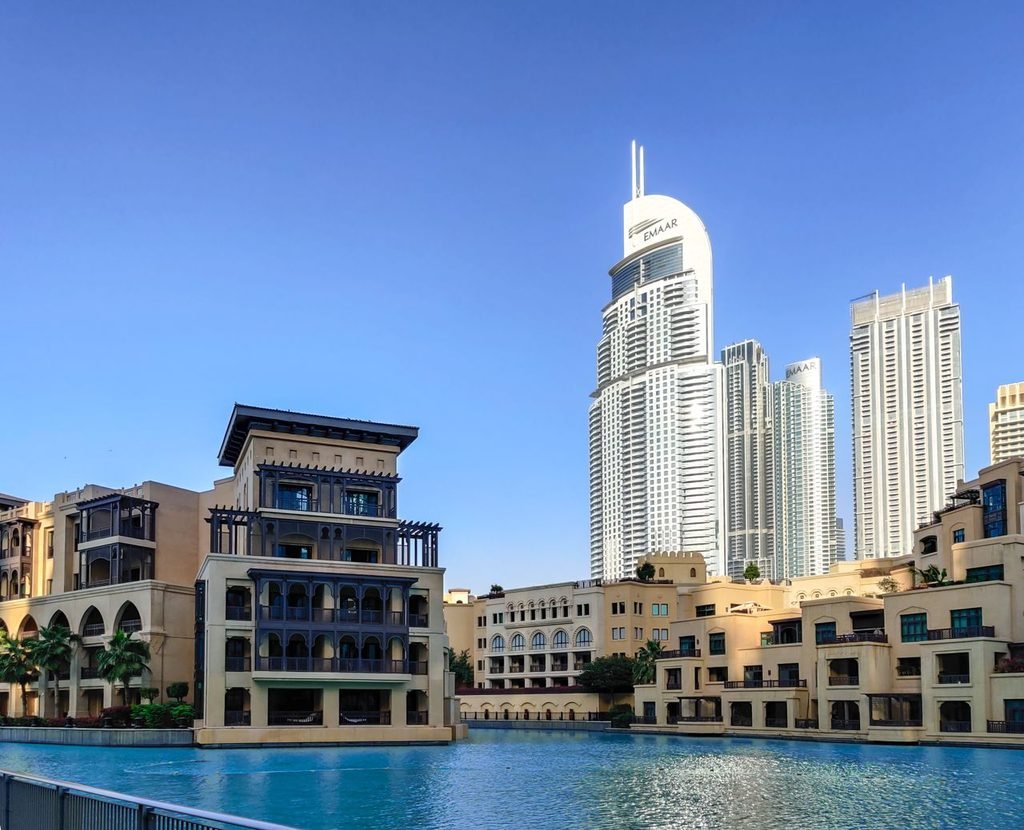
Condition, Design and Day-to-Day Living
The honest benefit of ready property is that what you see is what you get. You can stand in the living room at sunset, check the noise from the road, walk to the nearest school and meet the neighbours. Established communities also come with mature landscaping, working retail and a settled rhythm that a new district takes years to build.
Off-plan gives you something a resale cannot, which is a home nobody has lived in. Layouts reflect how people live now, with open kitchens, larger balconies and more storage, and newer towers are generally designed with current energy and smart home standards in mind. You also choose your floor, view and layout at launch, before the best units are gone.
There is a financial side to this as well. A new unit covered by the developer’s liability for installations and structure keeps maintenance spending low in the first years of ownership. An older unit often needs a refurbishment budget before it can be let at a competitive rent, and that money is rarely included in the buyer’s first calculation.
Which Buyers Should Choose Off-Plan and Which Should Choose Ready
The right choice depends far more on your situation than on the market. These are the patterns we see most often.
| Your situation | Better fit | Why |
| You need to move in within a few months | Ready | Keys come with the transfer |
| You want rental income immediately | Ready, and vacant | Rent starts as soon as you own it |
| You are building wealth over several years | Off-plan | Launch pricing and staged payments |
| Your income is strong but cash today is limited | Off-plan | A much smaller upfront commitment |
| You will rely heavily on a mortgage from day one | Ready | Banks lend more on finished homes |
| You want a new home built to current standards | Off-plan | Brand new, with your choice of unit |
| You are buying with a Golden Visa in mind | Either | Both can qualify at AED 2 million and above |
Many of our clients end up owning both over time. A ready unit covers today’s needs, and an off-plan purchase alongside it locks in the next home or investment at today’s prices.
Our Verdict on Off-Plan vs Ready Property in Dubai
If you need a home this year or rental income from the first month, buy ready, and budget properly for the fees, repairs and paperwork that come with it. For almost everyone else, off-plan is the smarter route. It asks for less cash upfront, spreads the rest, usually without interest, delivers a brand new asset under developer liability and gives you the benefit of launch pricing.
The condition is discipline. Off-plan rewards buyers who choose a proven developer, read the payment plan against their real income and price the project against completed buildings around it. Do that, and the waiting period stops being a risk and becomes the part of the purchase that works in your favour.
Frequently Asked Questions
Is Off-Plan or Ready Property Better in Dubai?
It depends on timing and cash. Ready property suits buyers who need to move in or earn rent straight away. Off-plan suits buyers who can wait for completion and want a lower upfront commitment, staged payments, launch pricing and a brand new unit.
Is Off-Plan Property Cheaper Than Ready Property?
The cash needed to start is usually far lower, because you pay a first instalment and the DLD fee rather than a full down payment plus resale costs. The price per square foot is not always lower, so compare each launch with recent sales in completed buildings nearby.
Which Is Easier to Finance?
Ready property, if you need a mortgage from day one. Banks can lend up to 80% on an expat’s first home under AED 5 million, against 50% on off-plan. Off-plan, however, needs no bank at all until the handover balance is due.
Can I Rent Out an Off-Plan Unit Before Handover?
No. Rental income only starts once the unit is completed, handed over and the tenancy is registered in Ejari. Investors who need income during construction sometimes pair an off-plan purchase with a ready unit.
Is Buying an Off-Plan Resale a Good Middle Ground?
It can be. Buying an off-plan unit from an earlier buyer usually means a shorter wait for handover, though the price includes part of that buyer’s gain. The developer must issue a no objection certificate, and you take over the remaining payment plan.
What Should I Check Before Buying a Ready Property?
Commission an independent inspection, ask for the building’s service charge history and check if the unit is tenanted and on what lease terms. Confirm the seller can clear their mortgage and service charges in time for the developer’s no objection certificate.
